Pacific Palisades Is Rebuilding the Same House
Read Article
Drive through the Alphabet Streets this fall and you will pass the same house several times, in slightly different colors.
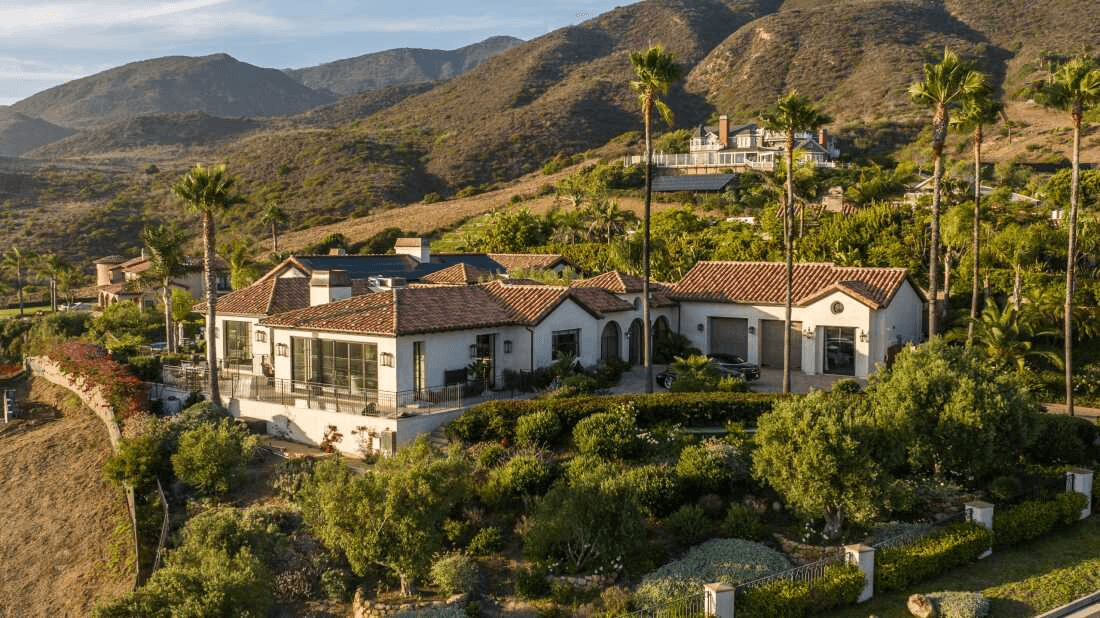
Some of them are well built. Very few were designed for the lot they sit on, or with any particular family in mind.
For a family that spent decades adding onto and living in a house, a plan picked from a binder is a hard replacement.
Built one owner at a time
The Palisades was not started as a speculative subdivision. In January 1922, the Methodist founders drew lots for home sites under the oaks in Temescal Canyon, and each family went on to build its own house.
The neighborhood filled in slowly after that. Even the Case Study Houses, a postwar program meant to produce prototypes, were each drawn for a particular client.
Over the following decades, houses changed hands and were remodeled or replaced, nearly always one lot and one owner at a time. That slow turnover is what gave the Palisades its character, and why so few houses ever looked like the one next door.
After the fire
The fire ended that process overnight. What took a hundred years of individual decisions to build is being replaced in the span of a few.
The houses going up now will set the look of the Palisades for decades. Most of the people deciding what they look like are doing it under pressure, with temporary housing that insurance will only cover for so long and a strong pull to get home.
The case for a stock plan
Speed is the main reason, and it is mostly homeowners choosing it. In city permit records, builders working from a repeat plan have been getting rebuild permits in about two months, while the median for everyone else is closer to three and a half. That gap is hard to ignore while paying rent and carrying a mortgage on an empty lot.
The design work is concentrated, too. City records show about 1,700 Palisades homes filed for rebuild permits since the fire. On the filings that name an architect, the same architect appears on roughly one in ten, and more than 25 percent are concentrated among just ten architects.
Most of the choice is cosmetic. One production builder lets any of its Palisades plans be built behind any of its exterior styles, so the same floor plan can sit behind a Spanish front on one street and an English cottage front on the next.
For a lot of families that is a reasonable trade, and we do not fault anyone for making it. It just produces streets of houses that were designed before anyone looked at the lot.
Plans drawn for any lot, not yours specifically
Palisades lots are rarely flat or square. Many slope, and the best view is often at the back of the property or off one corner.
A stock plan is drawn before anyone has seen your lot, so the main living space lands wherever the plan put it, sometimes facing the street with the ocean behind the garage.
Inside, window sizes and ceiling heights are chosen to work on any site and to price predictably, not because they suit the light on yours.
And when it comes time to sell, the house competes with near copies of itself a few doors down.
What custom is worth
A stock plan saves a few months and a design fee. Both feel significant in the middle of a rebuild, and both are forgotten within a year of moving in.
Part of that saving is paid for by the street. The Palisades became a place people wanted to live because its houses were each shaped by someone who cared how they turned out, and every custom rebuild keeps some of that alive.
The house remains. A family rebuilding to stay will live in it for twenty years or more, and spend every one of those days inside the choices made during design.
In a custom house, those choices were made for the people living in it. You feel them at six in the morning, in which room gets the first light, and at night, in whether you can hear the television through the bedroom wall.
In a production house, they were made once, for every future buyer, at the lowest cost possible.
The families who started the Palisades a century ago each built a house of their own design. The families rebuilding it now deserve the same chance, and the neighborhood depends on enough of them taking it.
Details
Date
Category
Current Events
Reading Time
4 min