Building Against Moisture and Mold in Newport Beach
Read Article
The most expensive failures in Newport Beach luxury homes are not framing failures or finish failures. They are moisture failures.
What we're solving for in Newport Beach
Marine-layer mornings push outdoor humidity above 80% during May Gray and June Gloom. Salt air corrodes the metal flashings, fasteners, and connectors that hold the building envelope together.
Mold needs three things to grow: a food source (wood, drywall paper, dust), oxygen, and moisture. The first two are present in every house. Moisture is the only variable the builder controls.
The healthy-home target for indoor humidity is 30% to 50%. Levels above 60% are breeding grounds for most mold strains.
Holding the house in that range is the goal. The specifications below are what it takes to do that in Newport Beach.
"Most homes fail in this climate in predictable, expensive ways. Building against those failures takes more attention at the design phase and more discipline during construction." - Jeremy Lepine, CEO of ARCA Builders
Moisture control by design
Moisture-control specifications work best when they are written into the project during design development, before the construction documents are finalized.
Adding flashing details, water-resistive barrier layers, or shower drying systems as change orders during framing is expensive and only partially effective.
ARCA enters projects during schematic design, which is the phase where envelope details, wall assemblies, and waterproofing strategy can still become part of the architectural drawings without adding cost or delay.
Slab vapor control
Concrete slabs are not waterproof.
Ground moisture moves through the concrete as water vapor and ends up inside the house, raising humidity, lifting wood floors, and feeding mold under cabinets and baseboards.
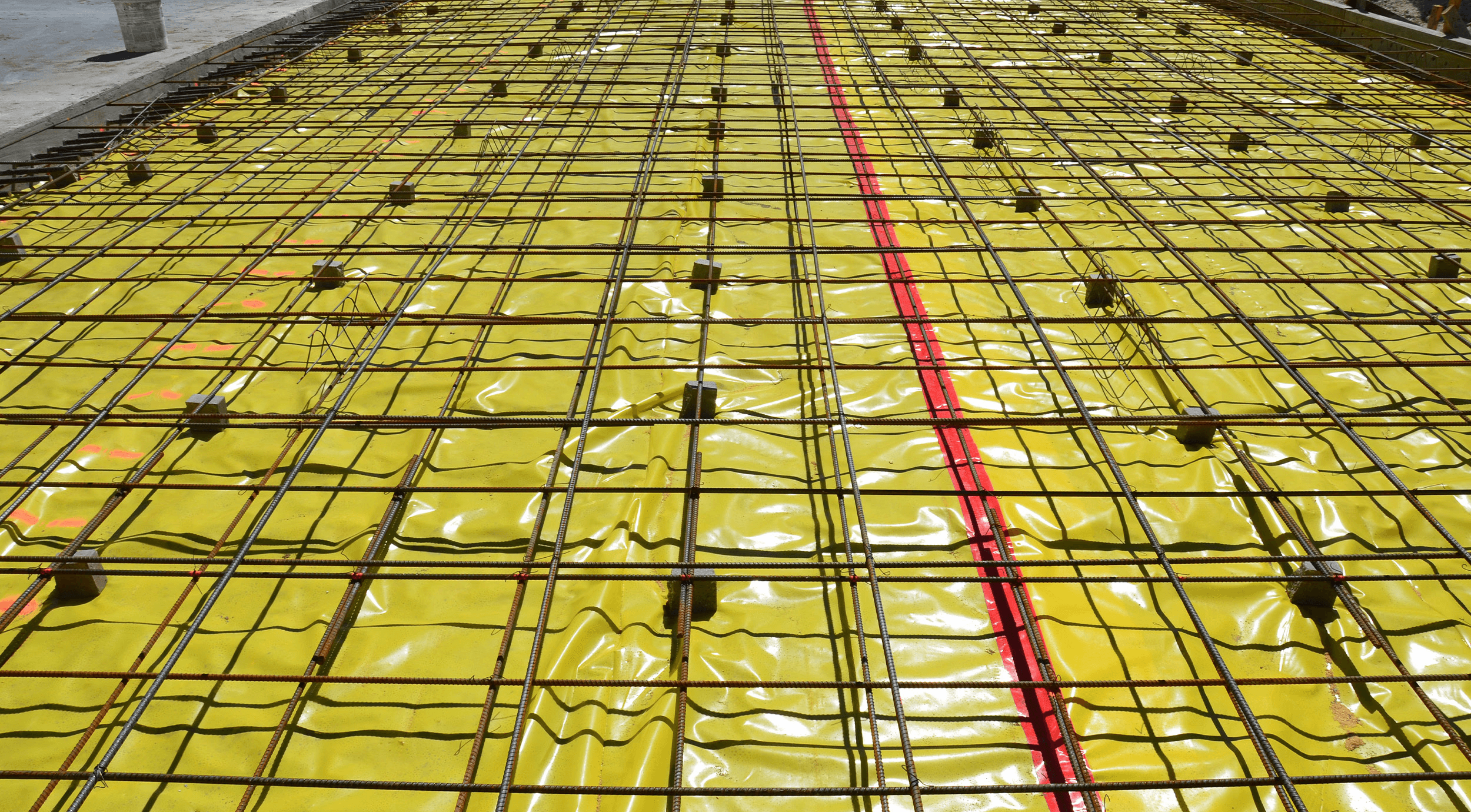
The defense is a heavy plastic sheet under the slab that blocks the vapor before it gets in.
ARCA installs a 15-mil Stego Wrap under every slab, sealed at every penetration where plumbing or electrical comes through.
Stego Wrap is a "Class A" vapor retarder, which is the highest tear resistance in the industry. Lighter-gauge sheets routinely puncture during construction, and the slab leaks vapor for the life of the house.
Before any flooring is installed, the slab is moisture-tested and the result is filed in the project closeout binder. Flooring installed over a wet slab cups, gaps, or delaminates within the first year.
The test cost is trivial. The floor replacement is not.
Crawlspaces and appliance leakage
Crawlspaces, common in hillside lots, lead to high humidity in Coastal zones unless they are actively managed.
ARCA dries down the crawlspace with industrial drying fans and a humidity log after the building is closed in to weather.
Once the log shows the space below 50% relative humidity, the encapsulation (a sealed liner on the floor and walls) is installed and the space is conditioned.
Lumber Moisture
Wood arrives at the jobsite with a moisture content that varies by supplier, season, and how the lumber was stored before delivery.
Wet lumber framed into walls dries inside the wall cavity, which means moisture enters the building envelope before the building is even finished.
ARCA tests every package of lumber on delivery and again before drywall closes the wall.
The targets:
19% moisture content or less at delivery. Wood above this is rejected or returned for drying.
12% moisture content or less before drywall. Wood that has not dried to this level gets more time before the wall is closed.
Lumber stored on site is tarped to keep marine-layer humidity out of the framing stock.
Every reading is logged per package and recorded in the project closeout file. If a humidity-related issue surfaces years later, the log shows whether the wood went in dry.
Three-layer water barrier
ARCA treats plaster as cladding, not a water stop.
The most common failure assumption in stucco-clad Newport Beach houses is that the plaster keeps water out with paper as a backup. This is not enough.
Building paper behind cladding (the exterior finish layer of the wall) is supposed to be a backup, not the only line of defense against rain and wind-driven water.
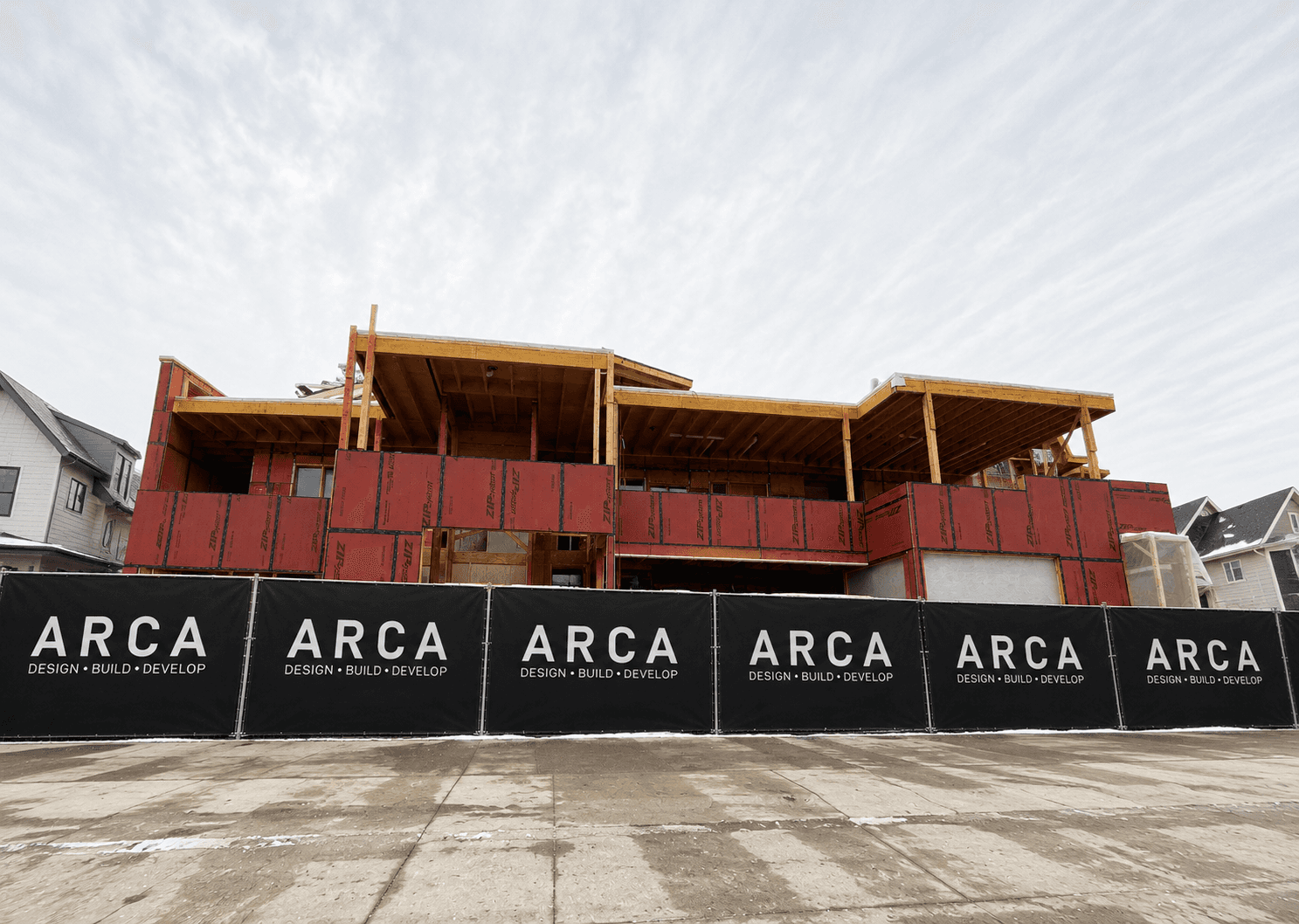
ARCA walls receive above-code protection on every elevation: 5/8" ZIP System sheathing, with every seam taped.
ZIP System is a structural wall panel with a water-resistant coating bonded to its outer face. When the seams between panels are taped, the water-resistive barrier becomes a continuous surface that wraps into window and door openings without gaps.
Window and door openings
The biggest water-entry risk in any wall is the holes cut for windows and doors.
ARCA details every rough opening with a self-adhered flashing membrane: Rainbuster, Vycor, or an equivalent fluid-applied or sheet product. These membranes bond directly to the framing and seal around the window before it is installed.
Stapled paper at the rough opening, which is still common in code-built houses, is the most common point of water intrusion in stucco walls.
Copper, not galvanized
Salt-laden coastal air is corrosive to metal. The flashings, fasteners, and connectors that hold the envelope together face the same accelerated wear as a car parked at the beach.
Galvanized steel is steel with a zinc coating. The zinc sacrifices itself to protect the steel underneath. In salt air, the zinc burns off faster than it does inland.
Within five to ten years, the steel under the depleted zinc starts to rust. The flashing then fails before the cladding it was protecting.
ARCA specifies copper for every horizontal exterior flashing rather than galvanized steel.
Copper has no equivalent failure mode. A properly installed copper flashing lasts the life of the home.
The cost difference is modest, but making this upgrade at construction trades a 5-10 year replacement cycle for ZERO replacements over the home's service life.
Floor drains in every wet room
ARCA installs a plumbed floor drain in every laundry, mechanical, and basement room.
This single intervention converts a $50,000 to $200,000 appliance leak into a nuisance call. A washing machine hose bursting at 2 a.m. without a floor drain runs water through every cavity it touches until someone notices. With a floor drain, the same burst runs into the drain.
Drain pans under every water-supplied appliance
Each appliance with a water connection sits on a plumbed drain pan:
Dishwasher
Washing machine
Refrigerator with ice maker or water dispenser
Standalone ice maker
Water heater
The cost to add a drain line during the plumbing phase is small. The cost of the failure it prevents can run into six figures.
Active drying showers
A passively drying shower can take hours to fully dry. The grout lines stay wet long enough for mold to colonize, and continue to grow behind the tile for years before anyone sees it.
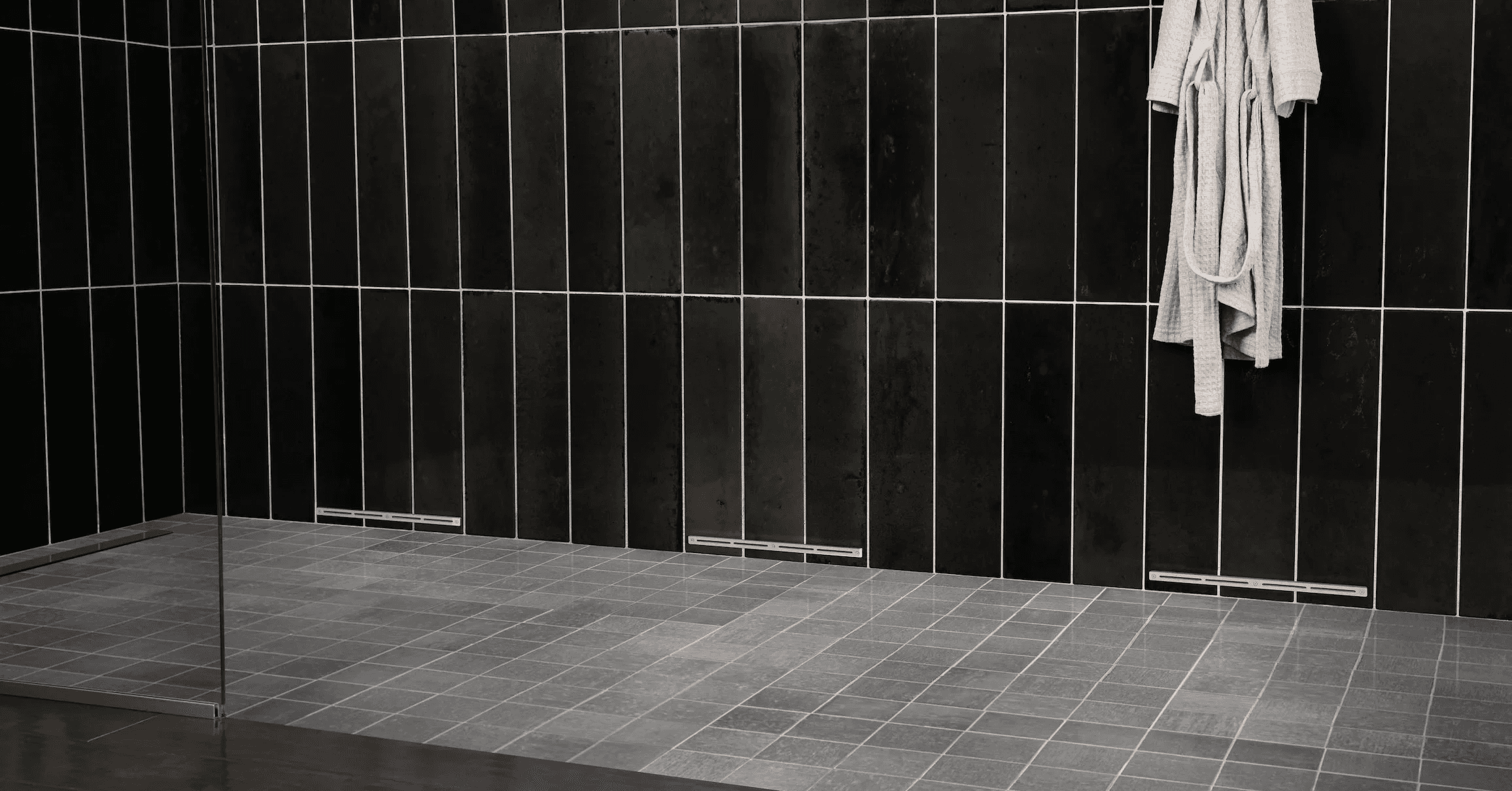
ARCA regularly installs an active drying system (Airmada or AirJet), which runs a programmed air cycle through the enclosure, fully drying the shower in 30-40 minutes.
Behind the tile, ARCA uses Schluter Kerdi waterproofing instead of traditional cement backer board.
Kerdi is a sheet membrane bonded that water cannot penetrate. Even if water gets past a grout line, there is no porous substrate for mold to grow on.
Limited closed-cell spray foam
Closed-cell spray foam has become popular in custom homes because it seals tight, adds rigidity, and packs a lot of insulation into a thin layer. The trade-off is that water cannot dry out of it.
If water enters the cavity through a roof leak, a flashing failure, or interior humidity migration, it stays.
Closed-cell foam at the roof deck has produced documented attic mold and sheathing rot failures in coastal California homes.
ARCA uses closed-cell foam only when absolutely necessary in engineered assemblies. It is not the default whole-house insulation.
ARCA's default ceiling-plane insulation is a vapor-open material (wool, wood fiber, or mineral wool), which allows the cavity to dry rather than trapping moisture.
Moisture audit at handover
Every ARCA project closes with documented moisture-control evidence the client receives:
Slab moisture test result
Lumber moisture log (delivery and pre-drywall readings, per package)
Crawlspace dry-down humidity log
Blower-door air-tightness test result (a test that pressurizes the house to measure how much air leaks through the envelope)
Third-party envelope inspection
Shower drying system commissioning report
The closeout package is the proof that the specification was actually built.
For homeowners building or renovating in coastal Orange County, ARCA is available for pre-construction consultation on healthy-home integration at any phase before drawings are finalized.
Details
Date
Category
Healthy Home
Reading Time
10 min